Chili Labs Localization Service – Painless Localization to Win Audiences Worldwide

Oct 20, 2026
•
15 min
•
Oct 20, 2026

Written by: Alans Romanovs
Job Title•Marketing Specialist @ Chili Labs
Did you know English accounts for only 18.6% of apps on the App Store?
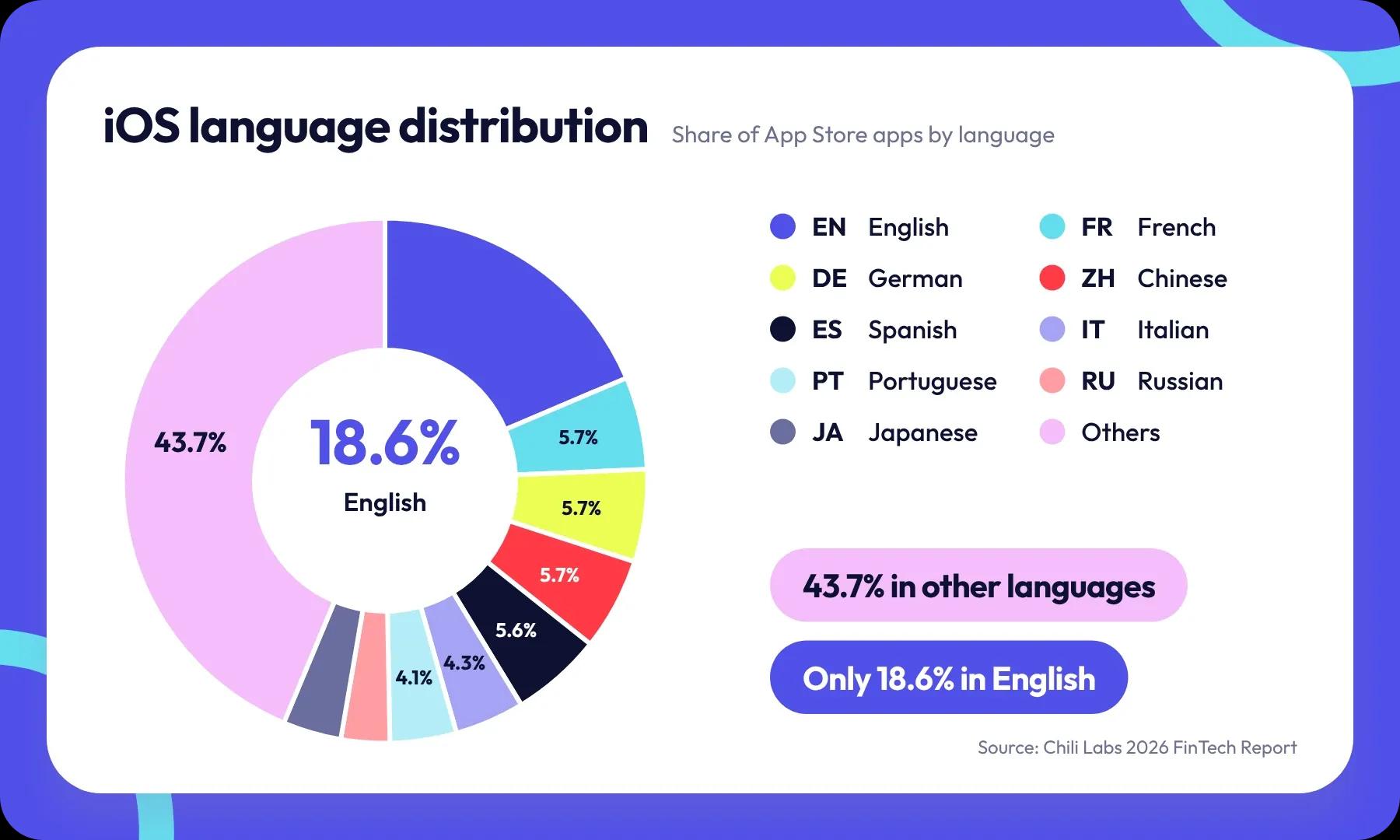 If you look at a specific category, such as FinTech apps, you’ll see something even more striking: 43.7% of iOS apps fall under “Other” languages (Chili Labs 2026 FinTech Report). That's millions of users. Companies skipping localization miss this market.
Yet, besides the benefits, there are bottlenecks, too. Localization can be costly, complex, and time-consuming. As web and app developers, we’ve been there, too. And we found a solution.
In this article, we talk about Chili Labs Localization Service. Built by developers who understand the hurdles of manual localization and the integration challenges of prepaid tools, our solution offers an alternative to both.
Interested in how it works? Continue reading!
Why Do You Need Software Localization?
Many businesses think software localization is just about translating content. In fact, it is far more. Localization is about the full adaptation of content, design, and functionality for a specific region, language, and culture.
To illustrate how it works, let’s review several use cases:
Use Case #1: Localized Content Is Relevant to Cultural Specifics.
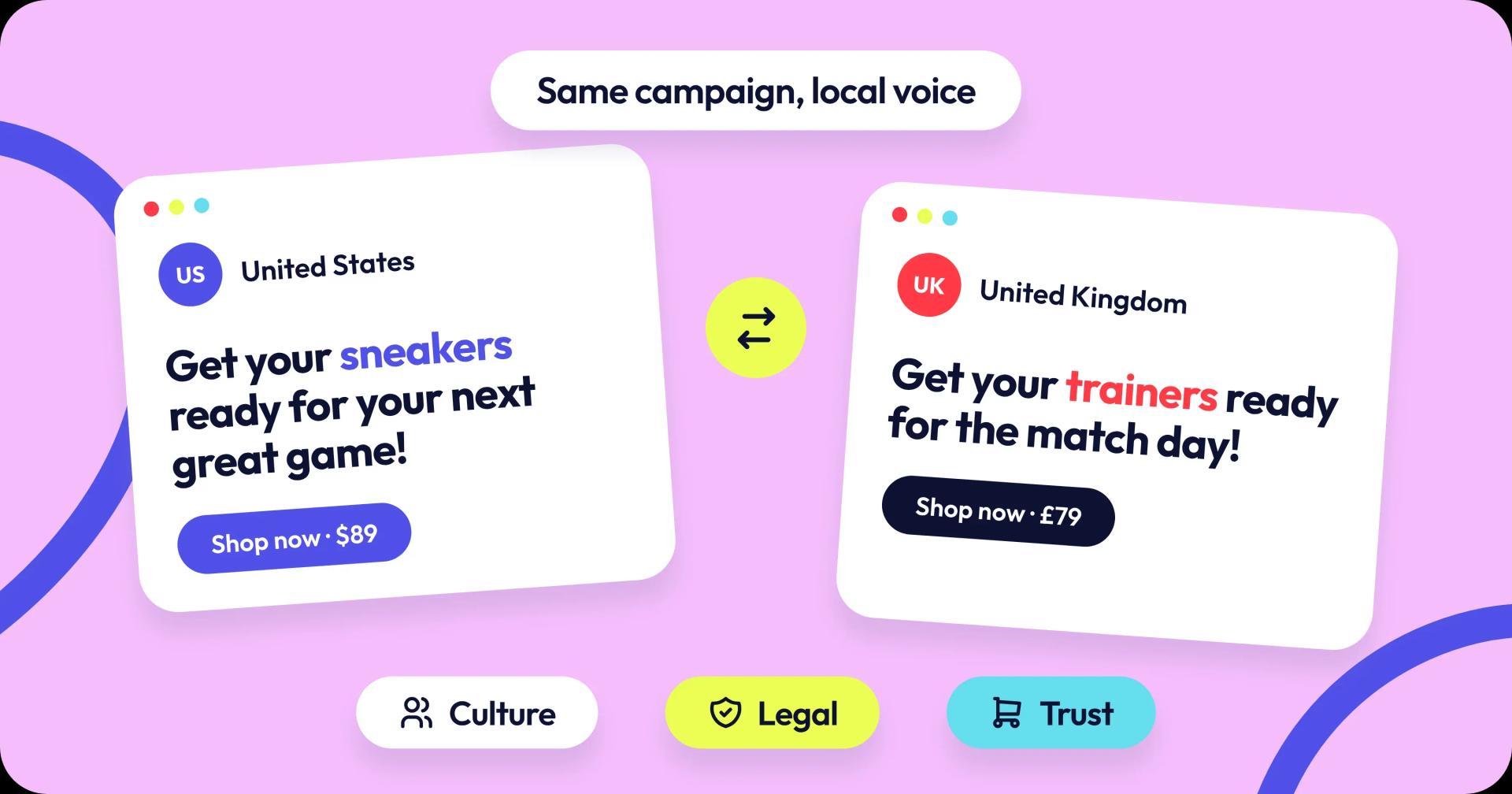
Imagine a footwear company that wants to run a seasonal campaign for their US and UK stores and fit the national sentiment to sound natural in the local market.
A website with generic text will use the same message for both countries. The localization of the website lets them play with motivation.
In the US, the marketing slogan will more likely sound like: “Get your sneakers ready for your next great game!”
In the UK, the message will be: “Get your trainers ready for the match day!”
Here, you work with different national language varieties, traditions, and trust.
In business terms, you create more relevant ads, which will drive stronger engagement and, potentially, lower cost per conversion, as more people who click the ad will stop and buy.
Use Case #2: Localization Reflects Legal Requirements
In another case, localization is needed to fit legal requirements. In the EU, there are more restrictions regarding customer data use, which include both GDPR and the AI Act.
Therefore, your cookie policy and the rules of data protection will be different.
The same applies to content. If you run, for example, a cybersecurity company and write a blog post about some typical security best practices, with website localization you must post different content for clients in the US and EU.
Similarly, in the US, companies falling under the California Act will have to meet other requirements than companies headquartered in other states.
In business terms, website localization allows you not only to meet the regulatory requirements, but also to tailor content to what really concerns your customers in different locations. This way, you build stronger authority and have better chances to get qualified leads.
Use Case #3: Localized User Experience Builds Trust in the Brand
Web and app localization helps build trust in new markets. For example, if a German person buys from a localized store, they will read product descriptions in German, see prices in Euros, pay with familiar payment methods, choose local shipment options, agree to the return and warranty information relevant to Germany, and, therefore, feel more secure with the product provider.
In business terms, you achieve reduced shopping hesitation and greater customer confidence, which potentially leads to better sales.
These are just a few examples of what localization really is. Naturally, this practice leads to more trust, better customer retention, improved visibility, and multiple other benefits. And still, companies don’t rush into it head over heels.
Want to learn more about how your company can benefit from software localization? Ask questions at a consultation with Chili Labs! Drop your message now!
Key Reasons Why Companies Don’t Localize
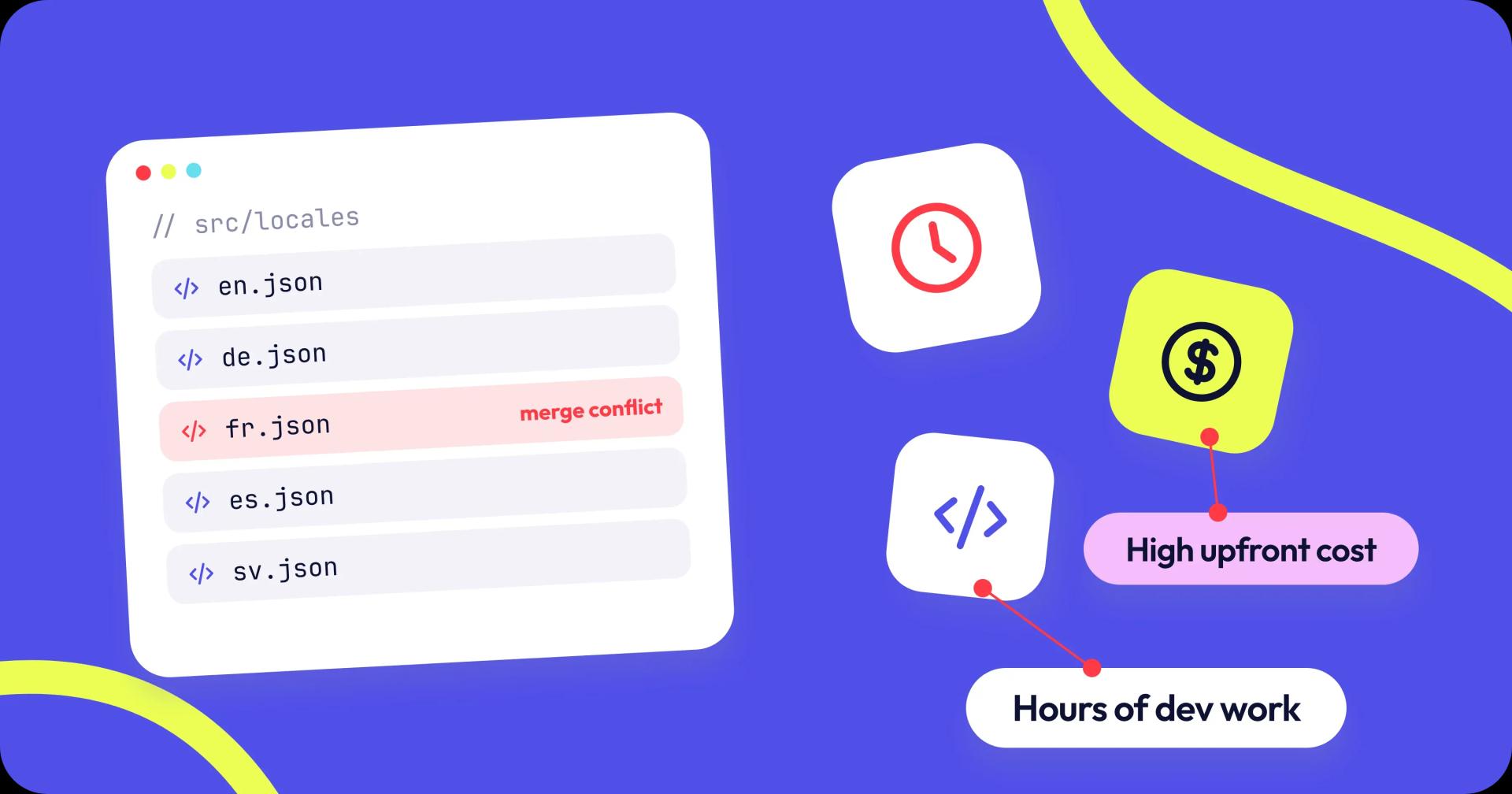
Despite the obvious benefits, when done manually, or with the help of prepaid tools, localization in software is a complex and expensive task. That is the main reason why companies postpone or drop it completely.
In a manual scenario, developers extract customer-facing text from the source code (buttons, menus, error messages, notifications, and onboarding instructions), translate it, and store different language variants in different .json files. Then they connect the files for different languages to the language selection system.
Each minor change requires hours of work from content and development teams, and thus many are quite expensive to launch.
The extra cost for the company lies in the fact that the development team gets distracted by marketing efforts, thus postponing their main tasks.
Automated localization presupposes the use of APIs and special tools to manage localization files and speed up the process. The cons of this method are high upfront cost and difficulty in integration.
Either of these ways requires deep involvement of the development teams and high spending.
Chili Labs Localization Service as a Solution
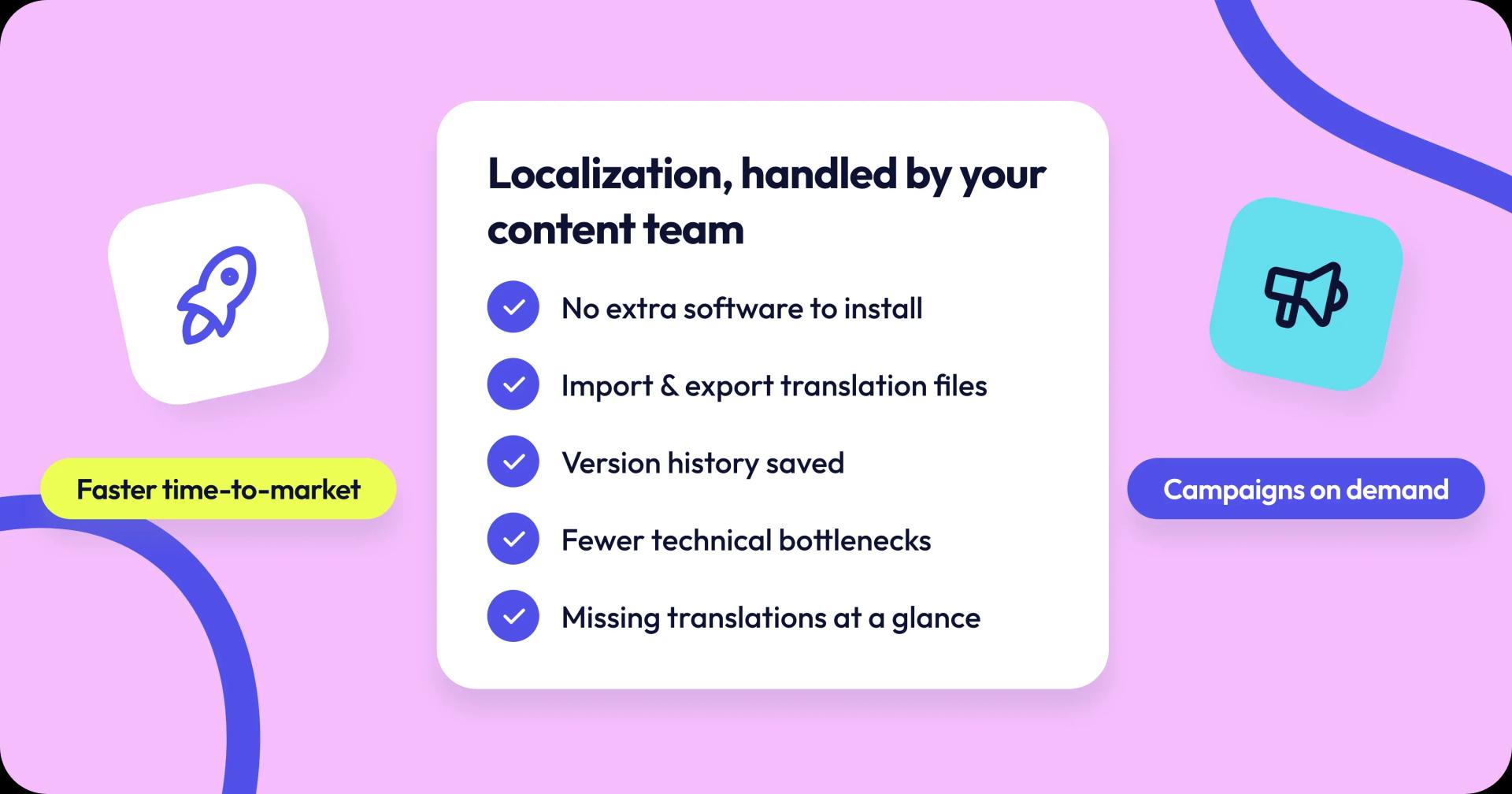
Having used both approaches while providing website localization services to our clients, we faced the same bottlenecks and found a solution. We’ve built a dynamic localization tool that enables content teams to manage content independently without involving development teams for every campaign.
Here is how it works:
- It doesn’t require any additional software to install or perform the tasks
- Allows for the import/export of the translation files
- Saves versions history
- Reduces technical bottlenecks
- Allows for a fast overview of missing translations.
The benefits you get from using the Chili Labs localization service are faster time-to-market, reduced developer overload, and an ability to run agile marketing campaigns on-demand. All of these are possible thanks to the well-thought-out functionality that targets the key challenges we faced with localization as developers.
How Does Chili Labs Localization Service Work?
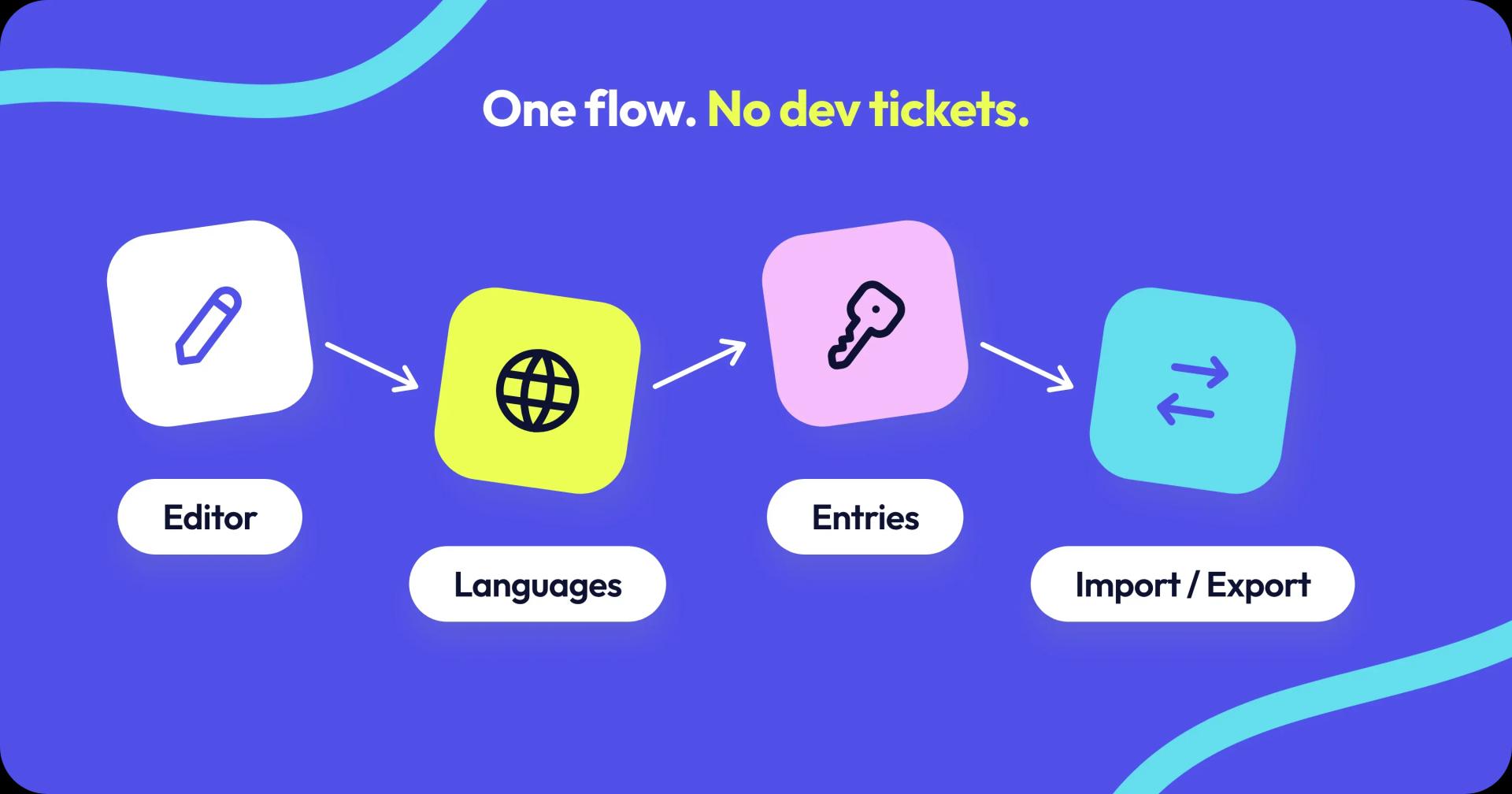
To understand how our service can help in your business, let’s have a look at its key features.
Translation Editor
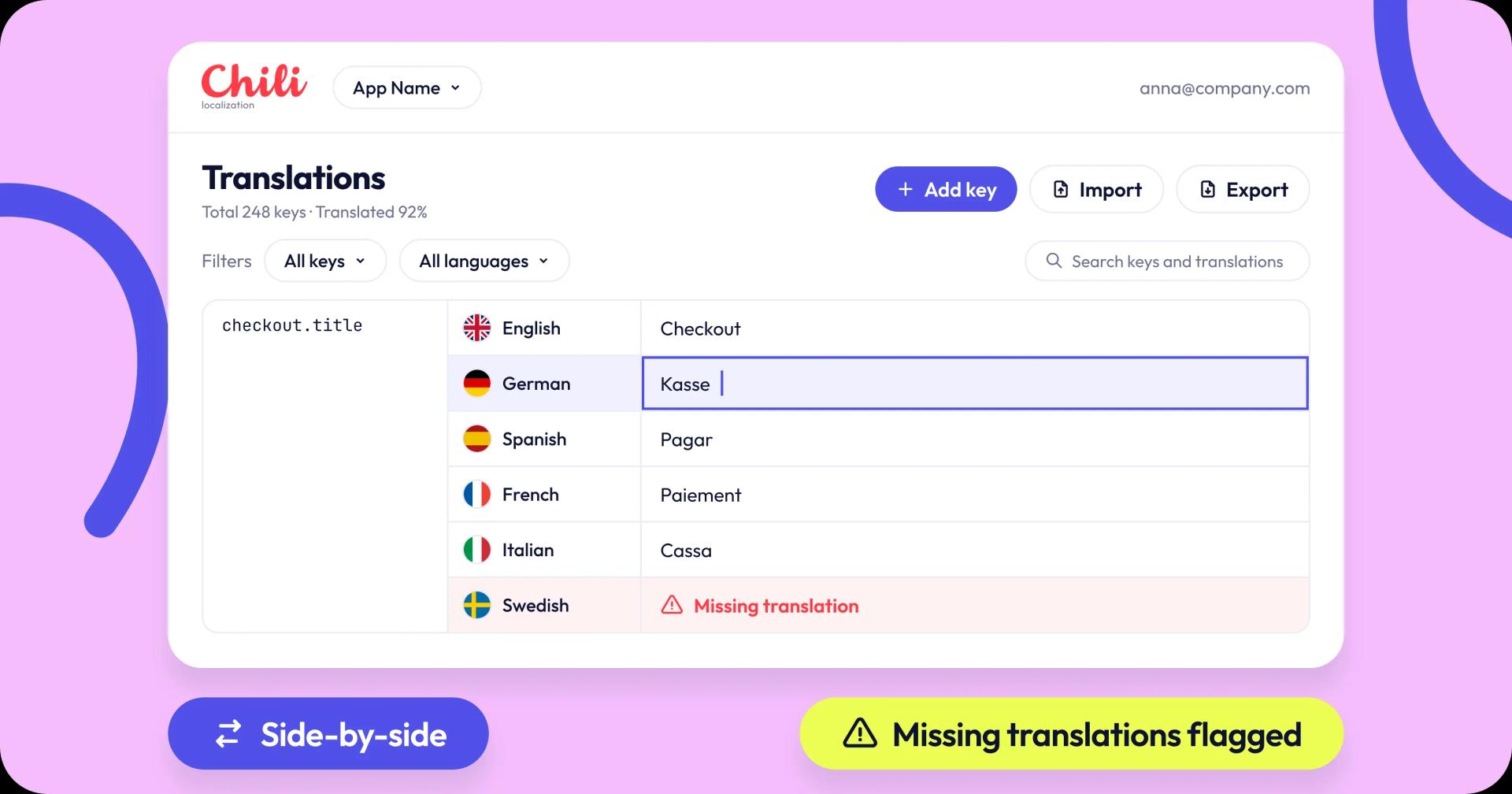
The service contains a handy translation editor that allows you to manage all translation files in one place.
The parallel language bars allow us to view the original and the translated text side by side for easy language comparison and checking.
It enables editing, adding, and deleting text in the same text boxes without extra steps and also allows you to spot missing translations, which gives better control over text quality compared to other tools.
Languages Available
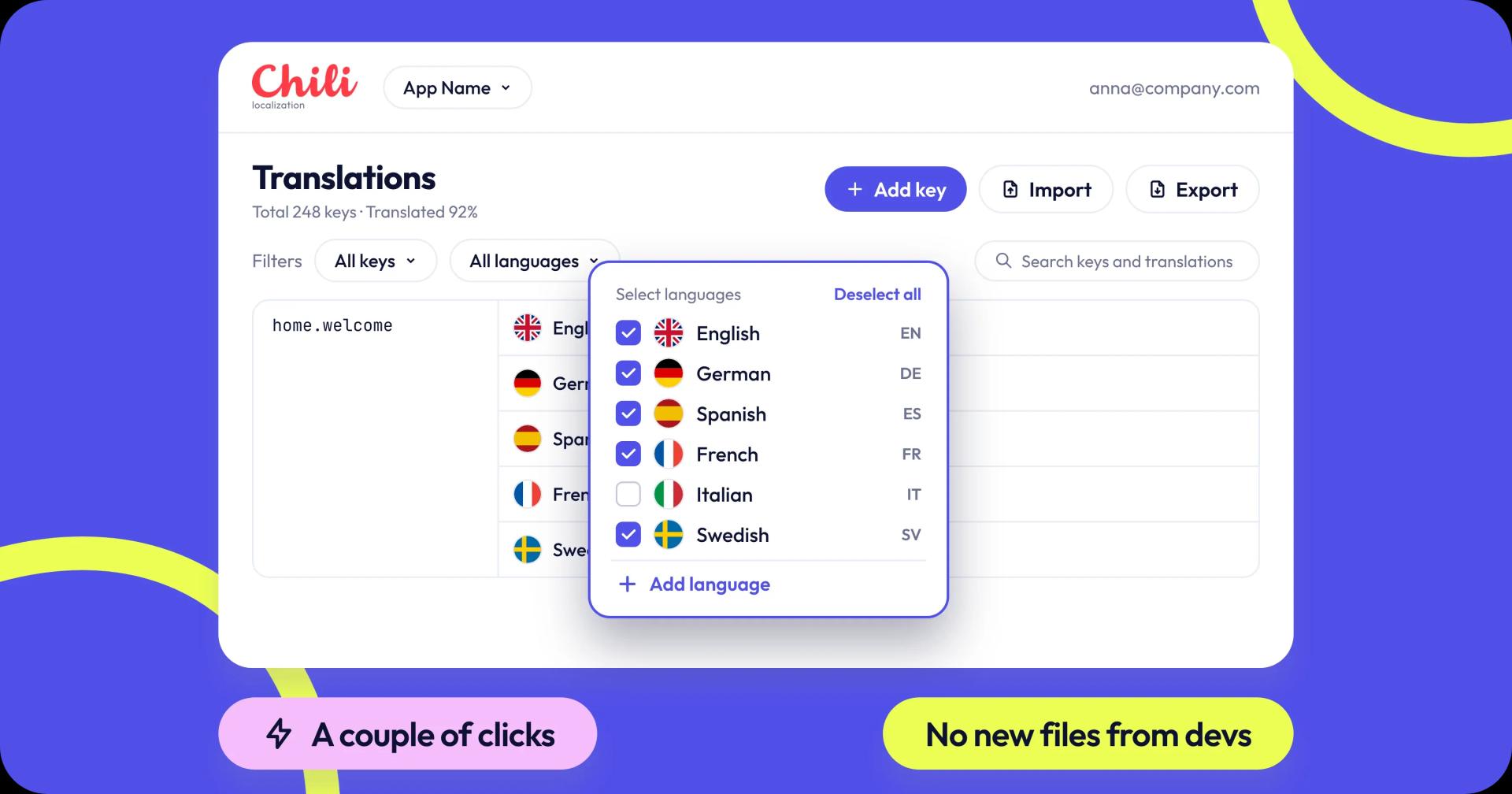
This feature allows you to view all the languages you added to your website or app, check if they are currently active, remove inactive versions, and add new languages in a couple of clicks, without asking developers to create additional files.
Localization Entries
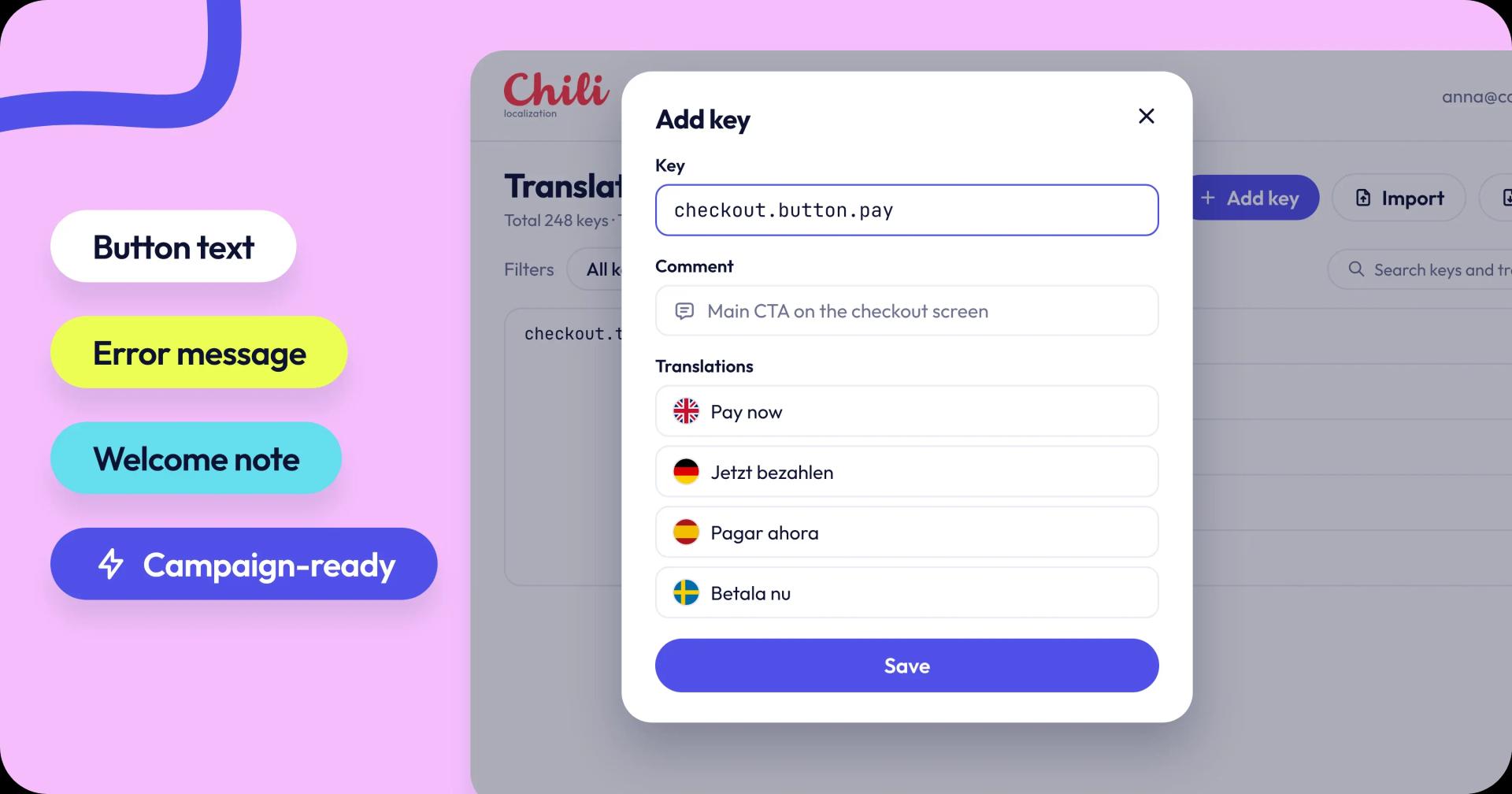
Once you need to add a new localization entry (button text, welcome message, warning notice, error message, menu item description), you can simply create a new key, add a comment about its use, and add translations to all available languages. This functionality speeds up campaign preparation and gives more agility and flexibility to marketing teams. For business owners, this feature means higher ROIs for campaigns, as you can run more campaigns with less effort and lower costs for their preparation.
Export & Import Translations
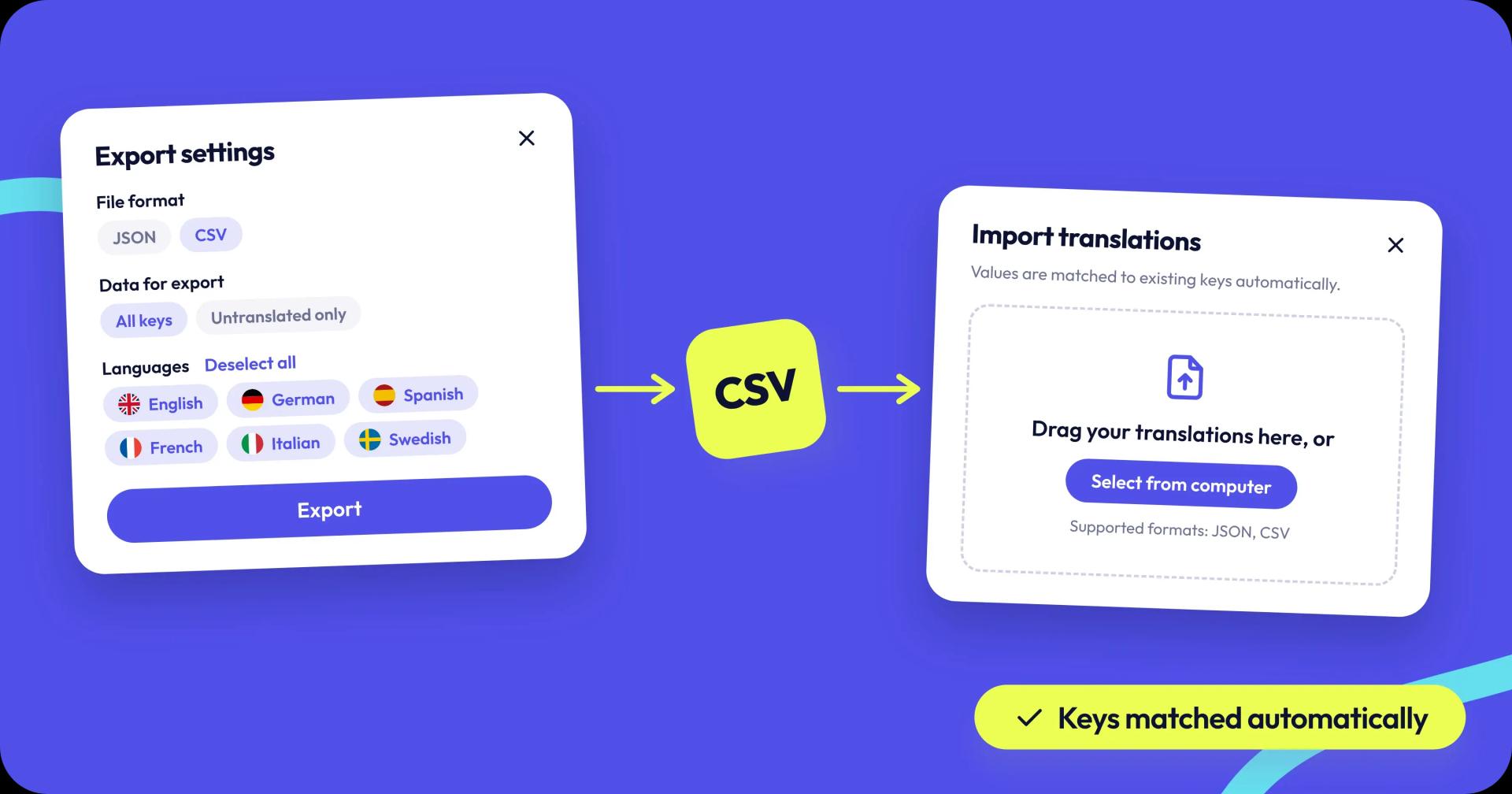
This feature lets content teams add or edit translations in bulk. You can download all the available translations as a CSV file, edit them, and upload them back. The system will match the values from the CSV files with the corresponding keys automatically.
This way, the present features of the Chili Labs localization service follow a simple, intuitive flow that helps add multiple languages and translations, edit texts in bulk, and keep localization fully under control – all this without technical complexity.
Final thoughts
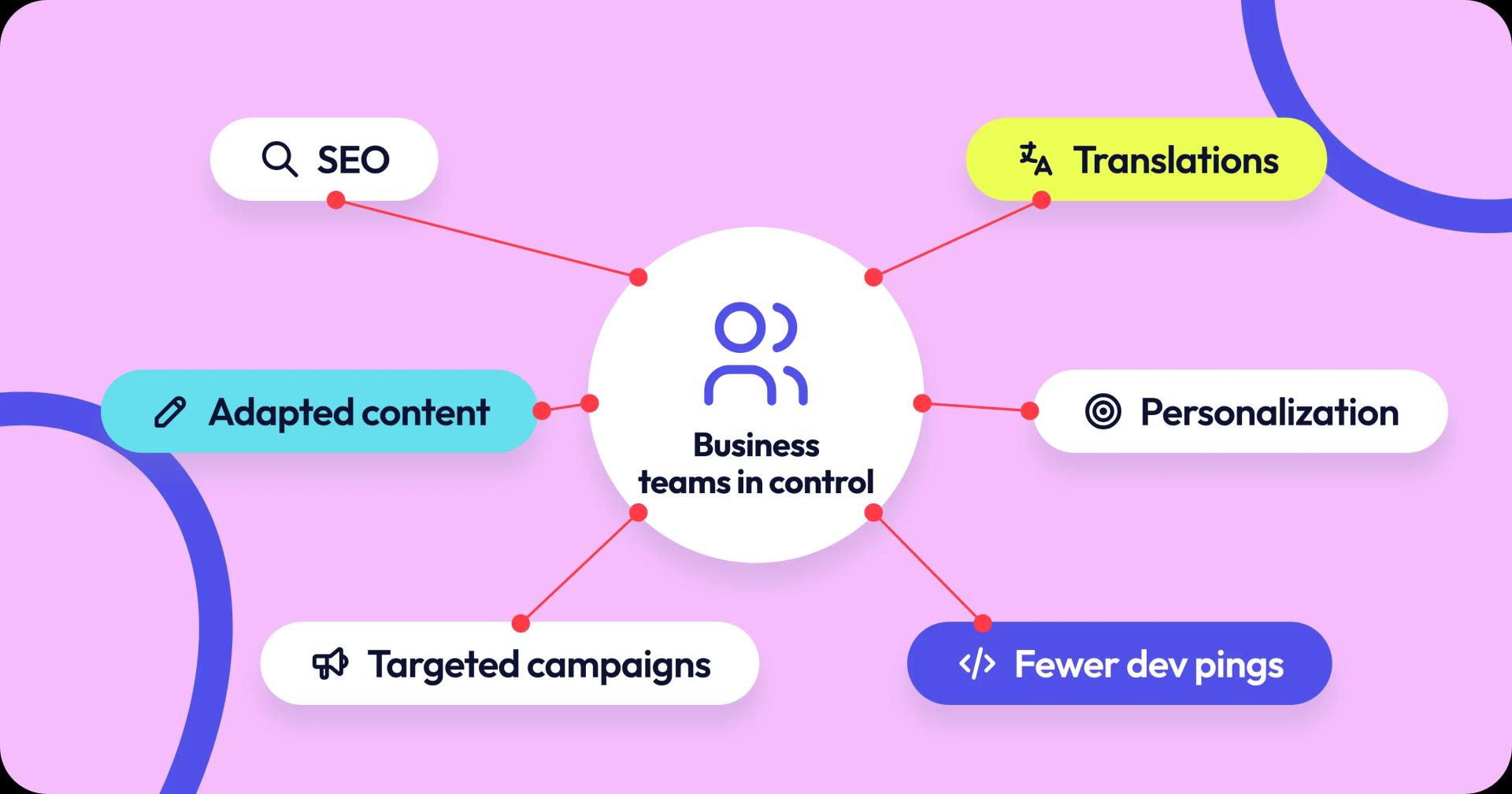
In a nutshell, the Chili Labs localization service lets business teams focus on the marketing tasks that localization enables. They gain more freedom with SEO, translations, adapted content, personalization, and targeted campaigns. It reduces the need to ping development teams for every task and lowers the high upfront costs of other paid tools.
If you want to discuss how the Chili Labs Localization service can help you in your business case, let’s talk! Book your call now!
Similar articles
Discover more with our related articles section. Stay informed about mobile app development, event organizing, and more.

Ask the Right questions Before starting a UX/UI Design Project
Effective UX/UI design process starts with the right questions. Learn how to prepare for design project by interviewing stakeholders and...

AI buzzwords for beginners - terminology cheat sheet
Were you ever confused by the terminology in a conversation about AI? Felt lost after hearing words like “LLM,” “hallucination,”...