AI buzzwords for beginners, part 2: agents, MCP and more

Nov 24, 2026
•
5 min
•
Nov 24, 2026

Written by: Alans Romanovs
Job Title•Marketing Specialist @ Chili Labs
AI is already in our pockets
You have probably already used AI, even without noticing. Your map app picked the fastest route, your inbox filtered out spam, and your phone suggested the next word as you typed. As we head into 2027, AI is becoming an even bigger part of everyday life, and knowing the words around it helps to keep up.
In part 1 of this cheat sheet, we covered the core terms: AI, machine learning, LLMs and the rest. This time we look at the words you hear once AI moves into everyday work.
New AI terms come up all the time: in product meetings, market research and tech news. Understanding this AI terminology is the first step to trying the technology and seeing if it helps in everyday work. That's why this AI terms cheat sheet covers the buzzwords you're most likely to hear next.
Below, we've grouped the most common terms by category and explained each in plain words.
From chatbots to AI agents
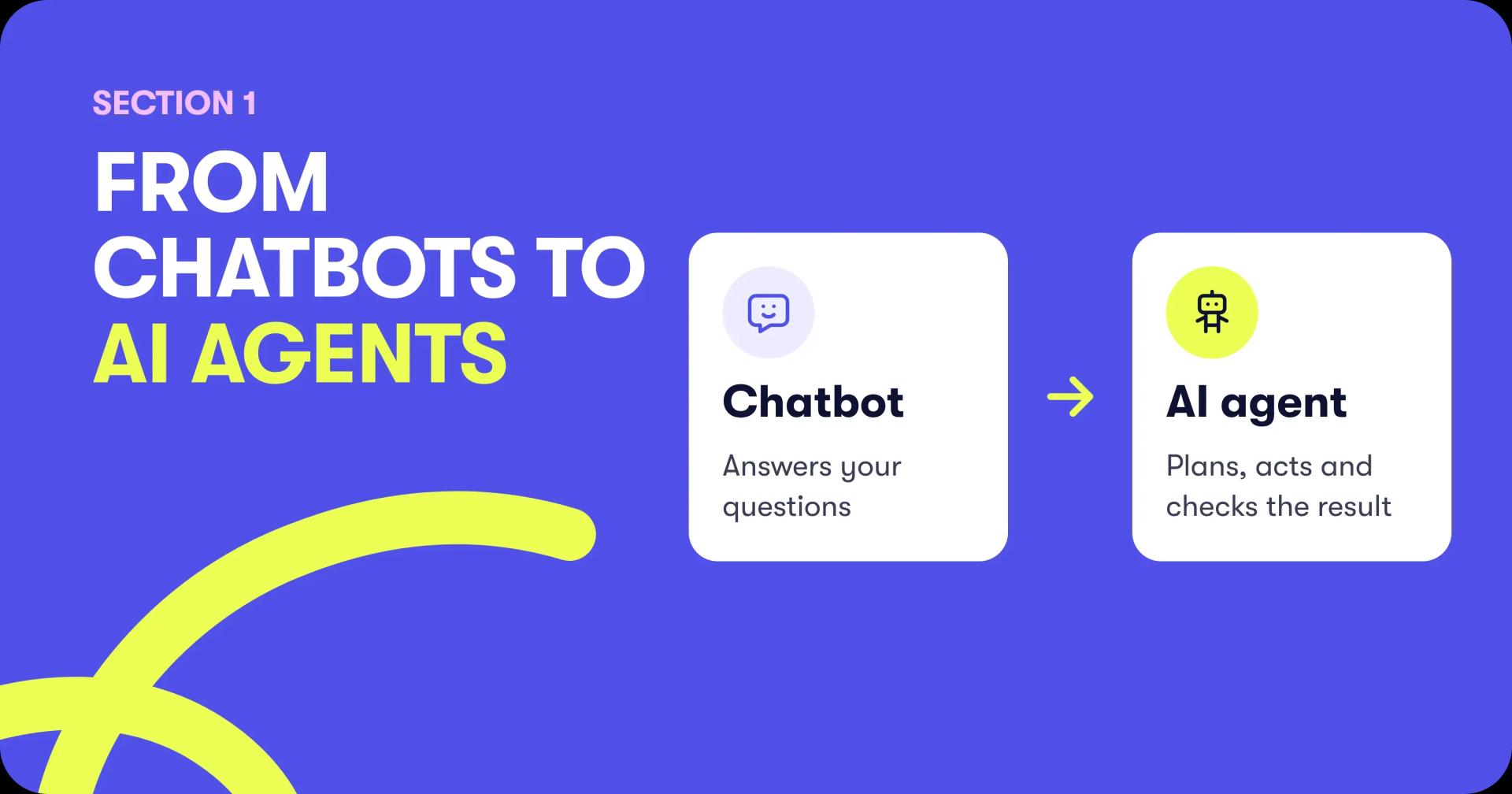
- AI agent: A piece of software built on AI that can plan a task, take actions and check the result, like booking a meeting or filing a report.
AI agent vs chatbot: a chatbot answers your questions. An agent goes a step further and does the task for you.
- Agentic workflows: A process where AI agents handle several steps in a row, for example reading an email, creating a ticket and notifying the right person.
- Multi-agent systems: Several AI agents working together, each with its own job, like a small team where one researches, one writes and one checks.
- Agent orchestration: Coordinating several agents and tools so they work in the right order and hand tasks to each other smoothly.
How do multi-agent systems and agent orchestration relate? A multi-agent system is the team of agents. Orchestration is how that team is managed: who does what, in which order, and what happens when one step fails.
- Human-in-the-loop AI: A setup where a person reviews or approves what AI does before it counts. Common wherever money or personal data is involved.
How AI connects to your tools
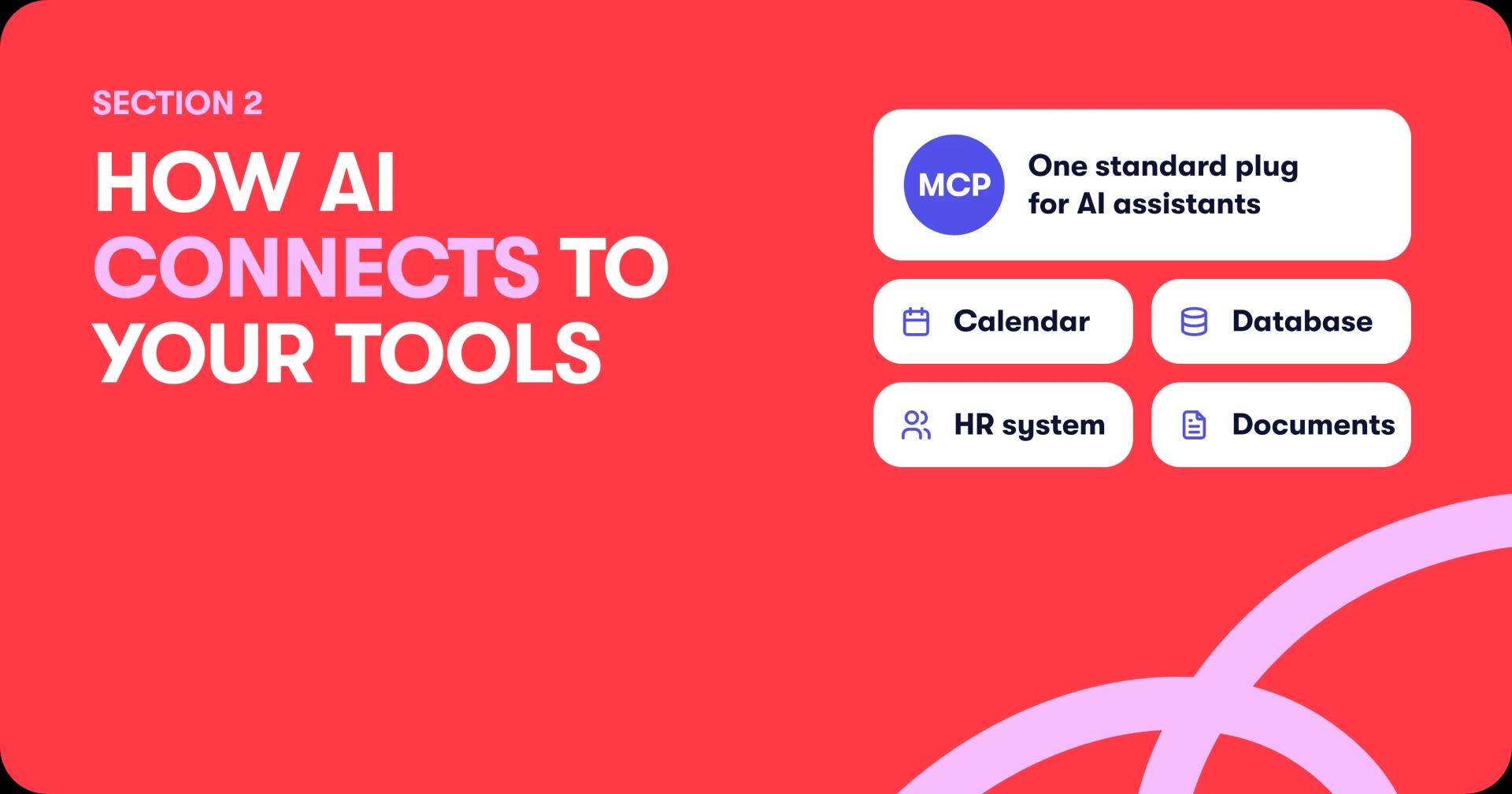
- MCP (Model Context Protocol): An open standard that lets AI assistants such as Claude or ChatGPT connect to other tools and data. Think of it as a universal plug for AI.
- MCP server: The connector a product provides so AI assistants can work with it. Our HR System has one, so HR managers can manage it through a chat.
- LLM integration: Adding a large language model to an existing product, so it can answer questions, summarise text or handle requests in plain language.
AI inside your apps
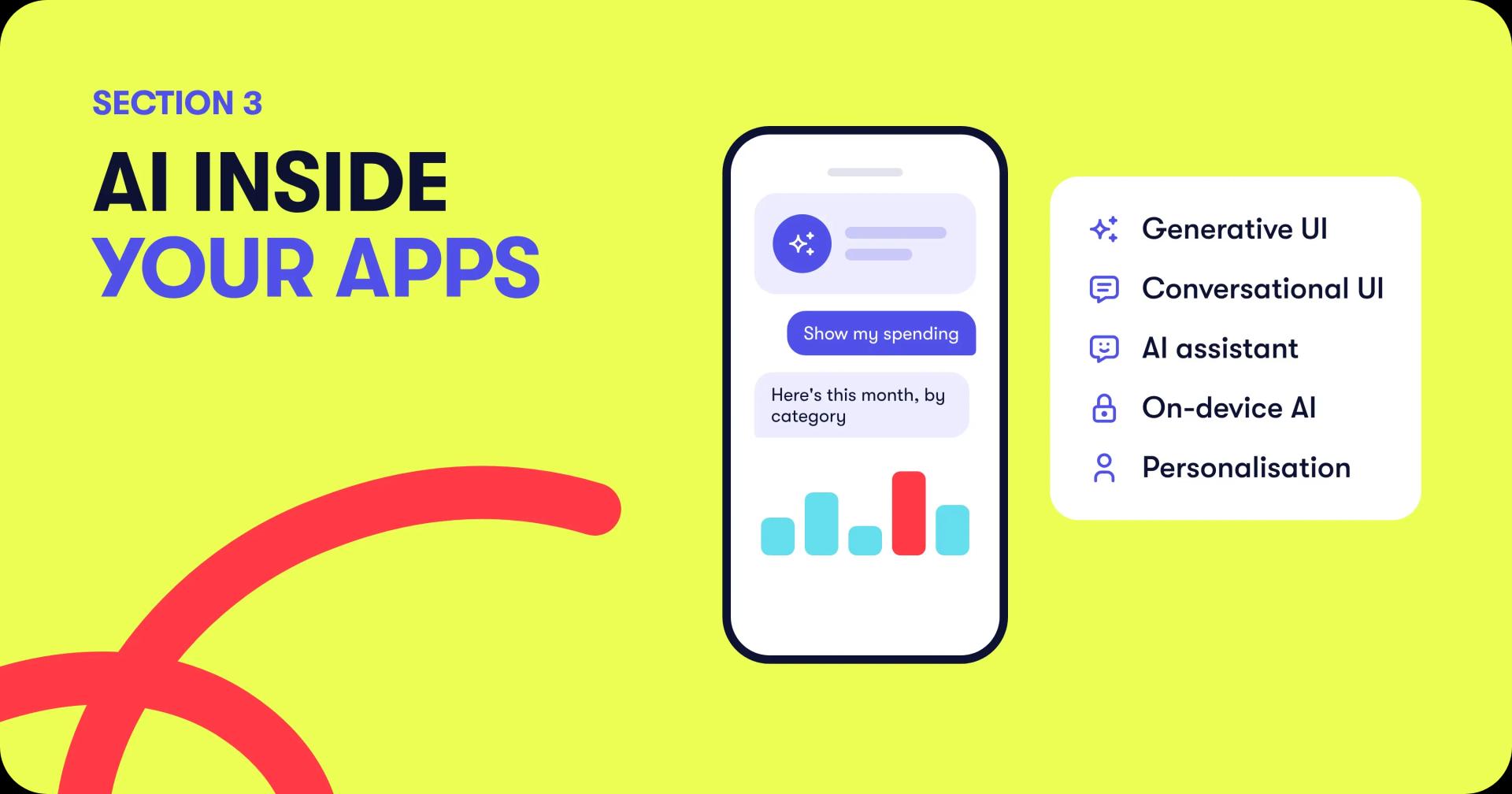
- Generative UI (GenUI): App screens that AI puts together on the spot, based on what the user needs at that moment.
- Conversational UI: An interface where you type or speak to the app in normal language instead of tapping through menus.
- AI assistant in app: A built-in helper that answers users' questions and guides them through the app.
- On-device AI: AI that runs on the phone itself, not in the cloud. It's faster and keeps data private. Apple's Foundation Models framework and Google's Gemini Nano are two examples.
- AI personalisation: Using AI to adapt an app's content to each user, based on how they use it.
What's the difference between GenUI and AI personalisation? Personalisation changes what you see inside a screen that's already designed, like the offers or articles shown to you. GenUI goes further and builds the screen itself, choosing the layout and elements that fit your task.
How developers build with AI
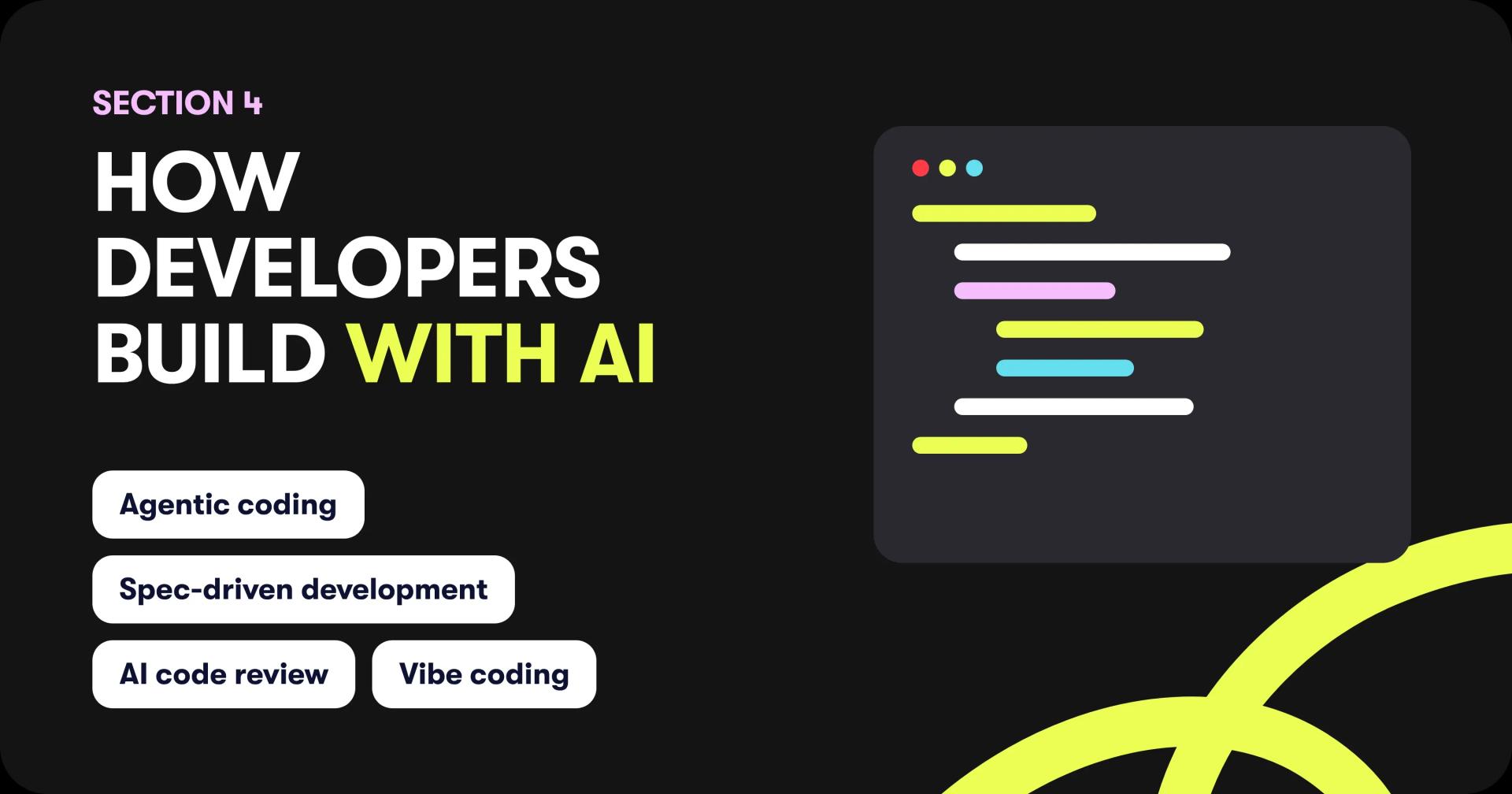
- Agentic coding: Developers give an AI coding agent a task, and it writes, runs and fixes the code, while the developer reviews the result.
- Vibe coding: Building an app by describing it to AI in plain words and accepting what it produces. Great for quick experiments, risky for products that need to be secure and maintained.
- Spec-driven development: Writing a clear plan first, then letting AI agents build from it. The plan keeps the AI on track.
- AI code review: Using AI to check code for bugs, security issues and bad patterns. A developer still makes the final call. (Want a human check of your code? See our Code Audit.)
- AI technical debt: Problems that pile up when AI-generated code is shipped without proper review, making the product harder to fix and grow later.
Keeping AI safe and compliant
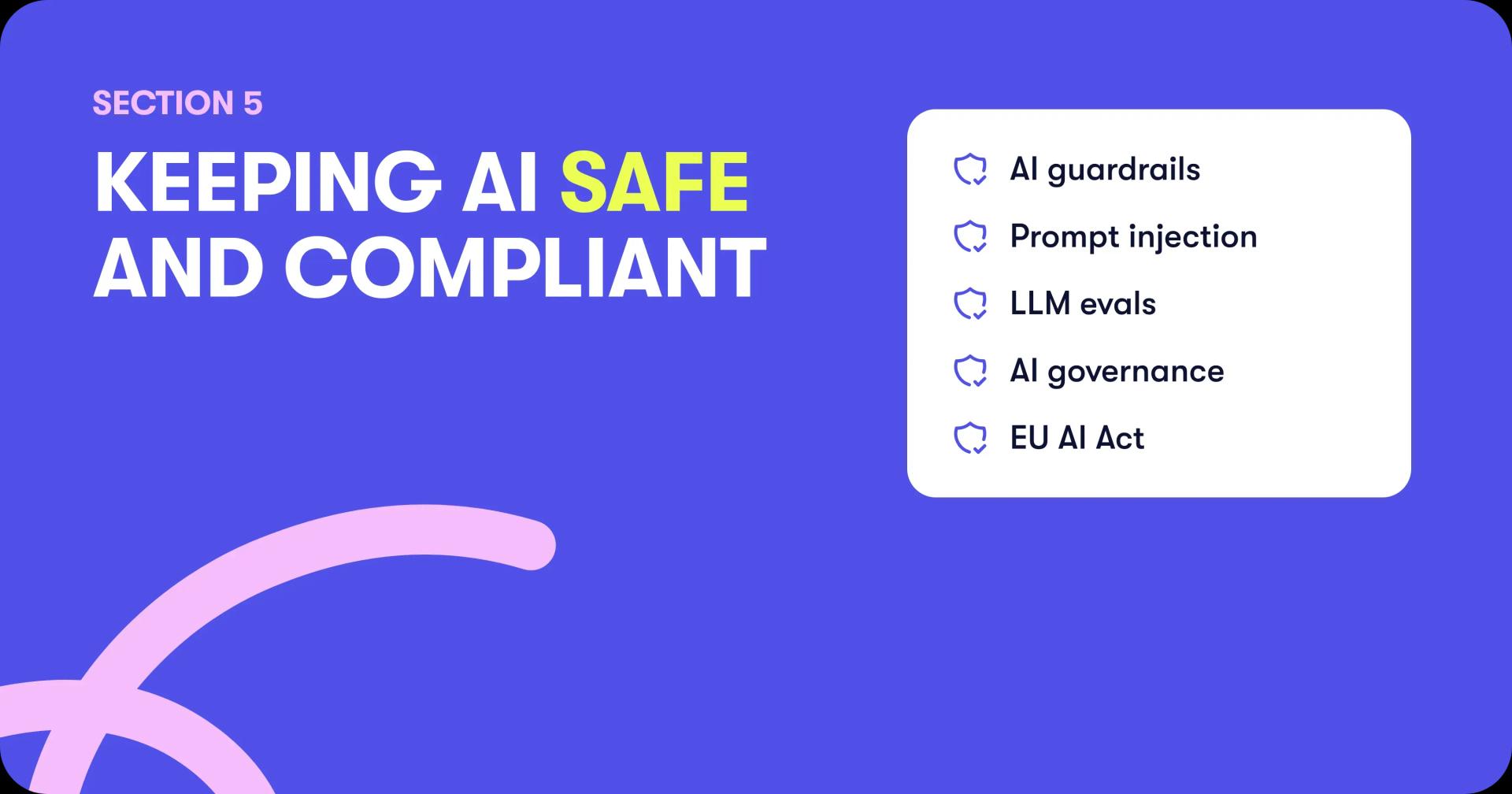
- AI guardrails: Rules and checks that stop AI from doing things it shouldn't, such as sharing private data or giving financial advice.
- Prompt injection: An attack where someone hides instructions in text, like a web page or email, to trick an AI into doing something it shouldn't.
- LLM evals: Tests that measure how well an AI model performs on real tasks, before and after it goes live.
- AI governance: A company's rules for how AI is chosen, used and monitored.
- EU AI Act: The European Union's law on AI. It sorts AI systems by risk and sets rules for each level, with obligations phasing in through 2027.
Quick glossary (8 must-know terms)
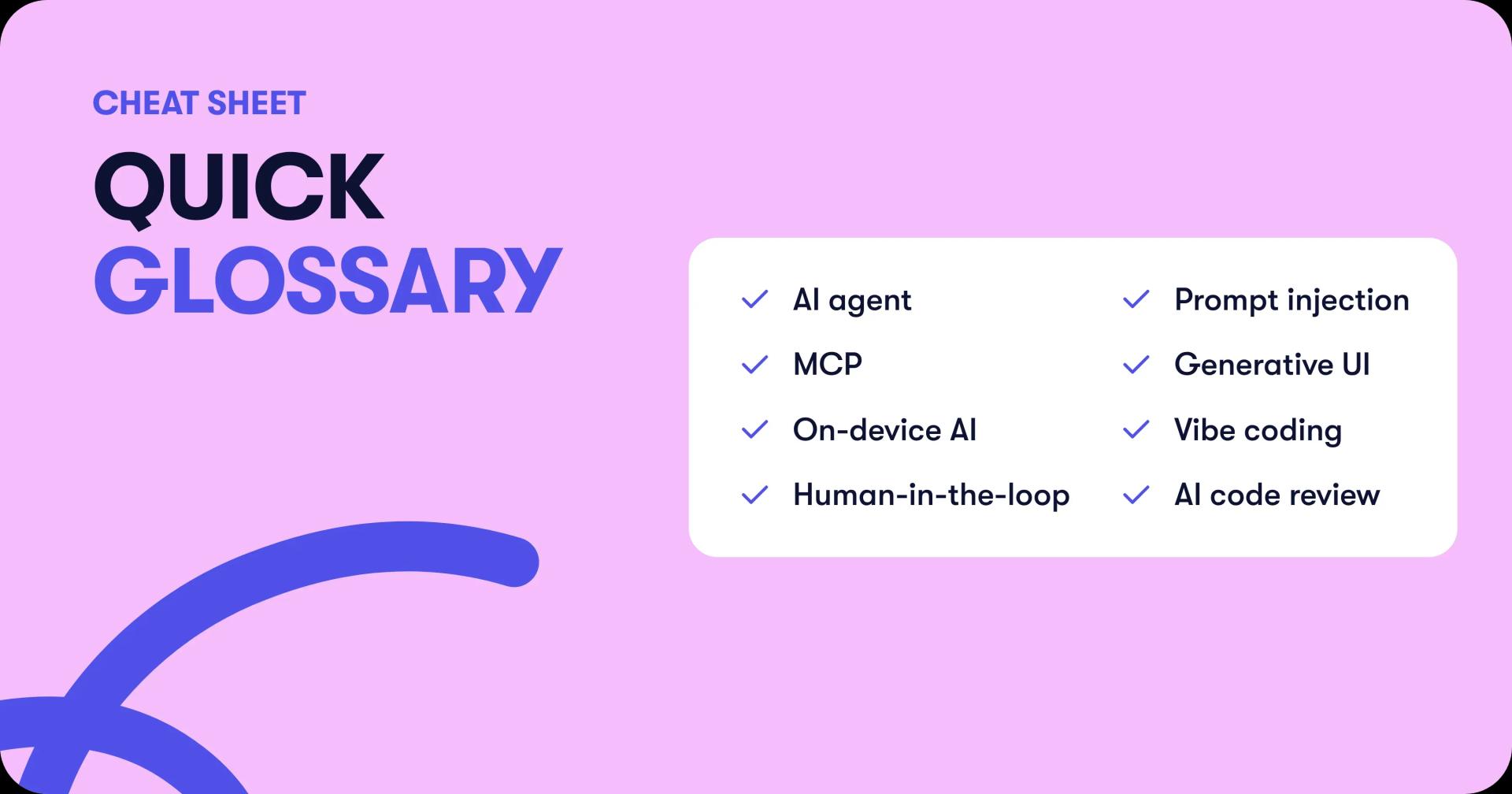
- AI agent: AI that does tasks, not only answers questions.
- Prompt injection: Hidden instructions that trick AI into doing something it shouldn't.
- MCP: A standard way to connect AI to tools and data.
- Generative UI: Screens built by AI on the spot.
- On-device AI: AI that runs on your phone.
- Vibe coding: Building apps by describing them to AI.
- Human-in-the-loop: A person approves what AI does.
- AI code review: AI checks code for bugs and security issues, and a developer makes the final call.
Wrapping up
You don't need to know how every AI tool works under the hood. Knowing these terms helps you follow the conversation, ask better questions and judge which tools are worth your team's time.
Planning an app and wondering where AI fits in? We'll help you find the places where it saves time, and keep it out of the places where it adds risk. Book your call now!
Similar articles
Discover more with our related articles section. Stay informed about mobile app development, event organizing, and more.

Ask the Right questions Before starting a UX/UI Design Project
Effective UX/UI design process starts with the right questions. Learn how to prepare for design project by interviewing stakeholders and...
AI buzzwords for beginners - terminology cheat sheet
Were you ever confused by the terminology in a conversation about AI? Felt lost after hearing words like “LLM,” “hallucination,”...