When the mobile industry shifted: Looking back from 2026
Jan 15, 2026
•
10 min
•
May 26, 2026

Written by: Alans Romanovs
Job Title•Marketing Specialist @ Chili Labs
Today’s mobile world feels simple on the surface. Android and iOS dominate the market, and modern smartphones feel polished, fast, and intuitive. But this level of refinement didn’t happen overnight. The mobile experience we take for granted is the result of years of experimentation, bold ideas, and countless cases of trial and error by companies building or expanding their own operating systems.
The current state of the market
iOS
Apple's iOS, originally called iPhone OS, was first introduced in 2007, with the launch of the first-generation iPhone. Nowadays iOS is a core part of Apple’s ecosystem, known for its seamless connectivity, strong security, and consistent user experience. Features like Handoff (start on one device, finish on another) and iCloud syncing allow tasks, photos, and data to move effortlessly across devices. Combined with Apple's strict privacy policy, iOS creates a cohesive, closed, but powerful environment.
Android
There’s no contest when it comes to global reach. Launched in 2008, Android is the most widely used mobile operating system in the world. Its open-source roots mean that any phone maker can adapt it for countless devices: from budget-friendly handsets to flagship powerhouses.
Android’s strengths are modularity and diversity: users enjoy deep customization, a massive app ecosystem (via Google Play and third-party stores), and strong integration with Google services.
Currently, Android dominates the global smartphone OS market with roughly 70–72% share, while Apple’s iOS holds about 28%. Most other operating systems are limited to niche markets or have become part of history.
New contender - HarmonyOS
Developed by Huawei, HarmonyOS was designed with a broader vision than traditional smartphone platforms. Instead of focusing solely on phones, it aims to unify smartphones, wearables, TVs, and IoT devices under a single, consistent user experience.
Development began in 2016, with the first public unveiling taking place on August 9, 2019. In its early stages, HarmonyOS relied on Android-based foundations, allowing Huawei to maintain app compatibility while building its own ecosystem. Over time, it transitioned into a standalone operating system.
HarmonyOS initially launched on smart screens before expanding to smartphones in 2021, marking Huawei’s decisive move toward platform independence. Since then, the OS has continued to evolve, reaching its 6th stable release.
While its global presence remains limited, HarmonyOS has gained strong traction in China and continues to grow. Its long-term ambition is clear: to deliver a seamless, cross-device operating system designed for an increasingly connected world.
How industry shifted, hardware vs software
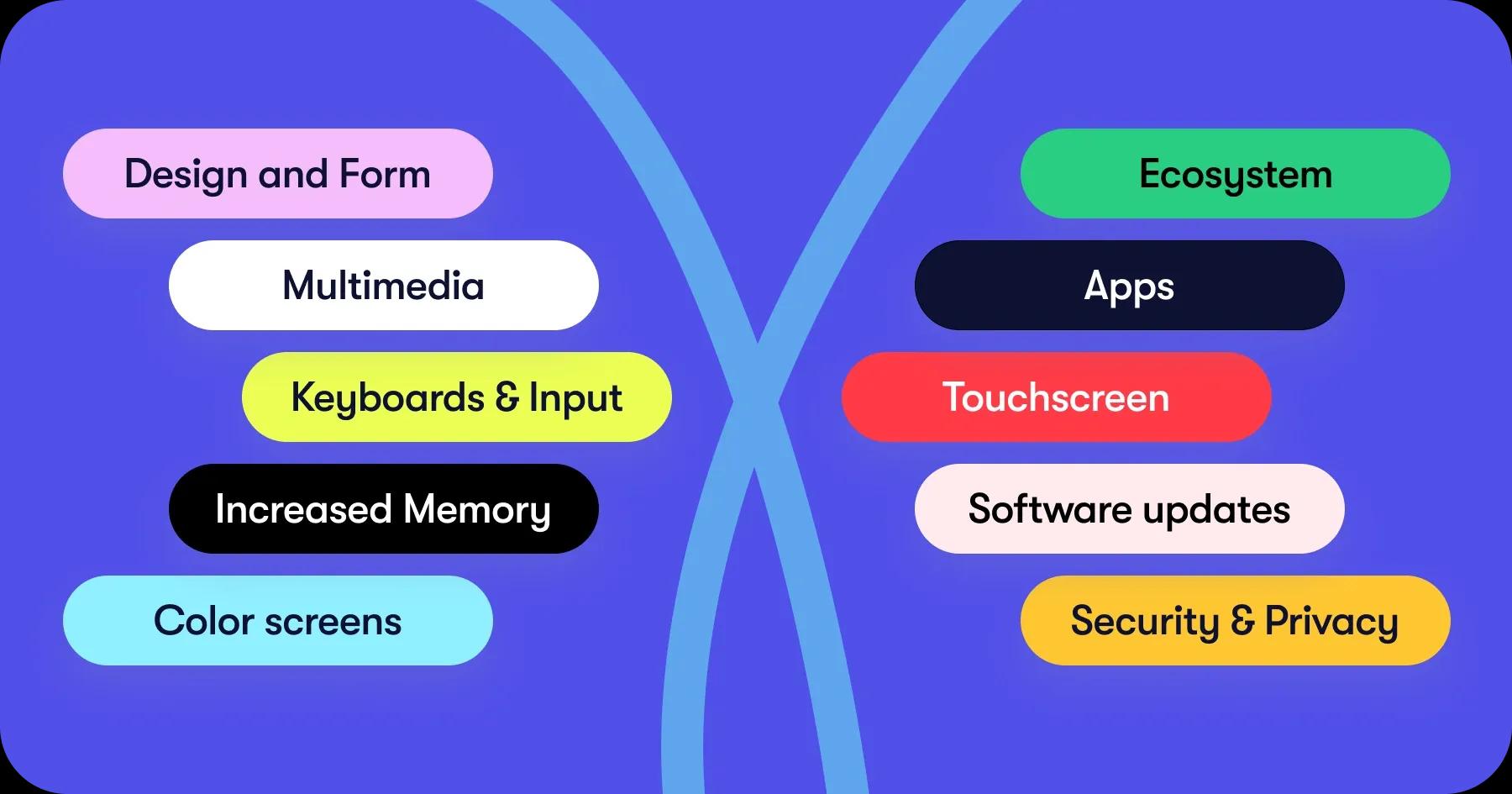 Long before today’s standards were established, mobile companies had a completely different approach to product development. Most industry giants at the time, such as Nokia and BlackBerry, focused primarily on hardware, and the market was massive. Competition centered on physical features and technical specifications until a major paradigm shift moved the focus toward software, apps and services.
This shift began with the introduction of iOS and Android. The iPhone was initially met with skepticism, as many competitors downplayed its potential. Android’s creators, however, quickly recognized the change and redesigned the platform. They moved away from BlackBerry-style prototypes with physical keyboards to compete directly with Apple’s touchscreen-first and app-based approach.
Many industry leaders, including former Microsoft CEO Steve Ballmer and executives from Nokia and RIM (currently known as BlackBerry), mocked the iPhone for its lack of a physical keyboard, high price, and use of the then-slow 2.5G EDGE network. It was widely seen as a niche, expensive device unlikely to appeal to business users, their primary market at the time.
Critics and analysts were questioning whether Apple could succeed in a market with low margins and established players. They highlighted the lack of basic features like copy/paste and a third-party App Store at launch.
Despite industry skepticism, consumer reaction was enthusiastic, with long lines forming at stores on launch day. Some saw it as an instant success, a "game-changer" that redefined what a mobile phone could be by combining a phone, an iPod, and internet communicator with an intuitive touchscreen interface.
To compete, companies advanced their existing OS platforms and experimented with new ones, creating unique approaches to multitasking, security, interfaces, and app ecosystems along the way. Some succeeded briefly, some failed quickly, but all of them left a mark that shaped what smartphones have become today.
Historical OS Names That Influenced Mobile Tech
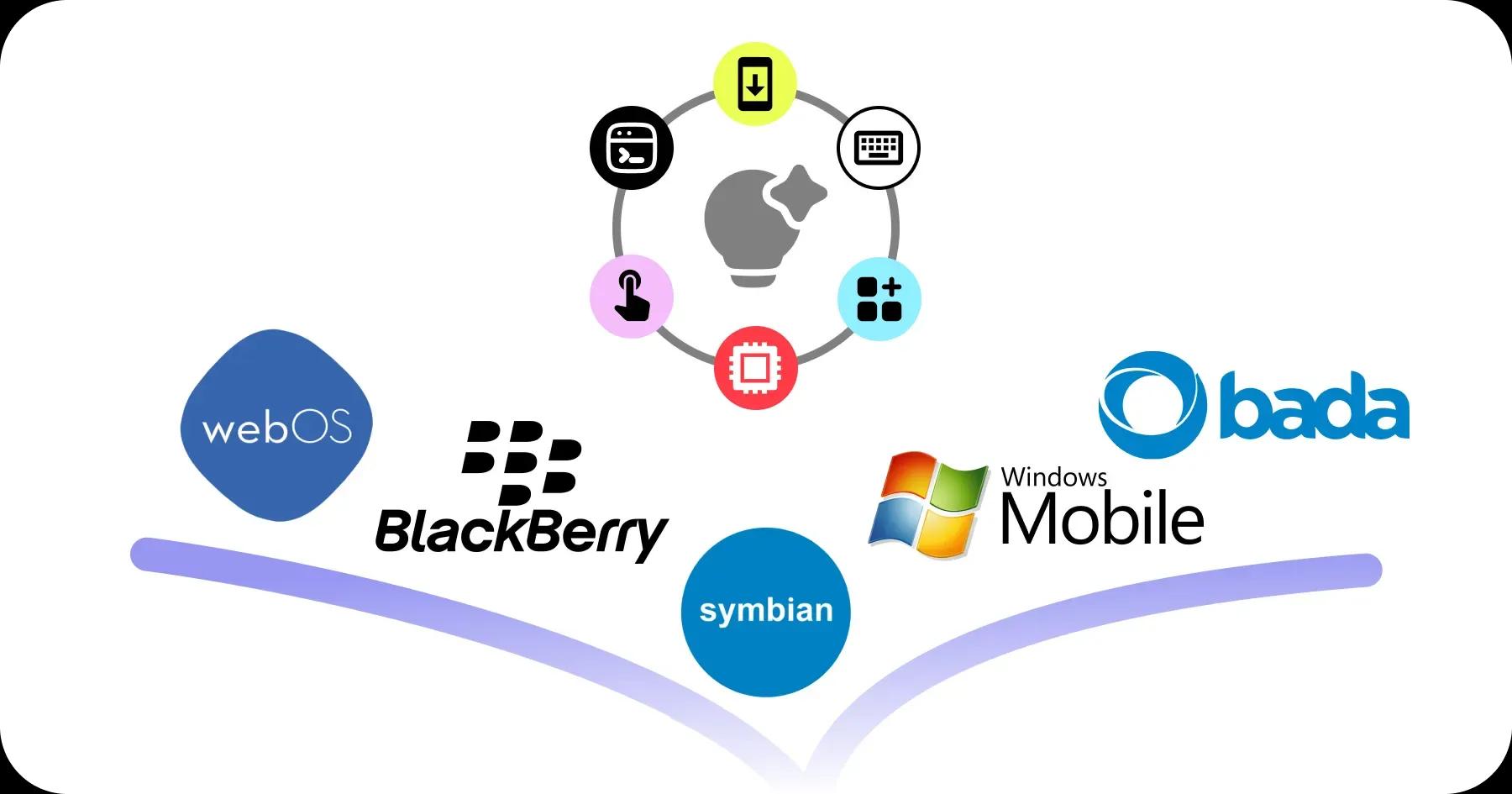 By the late 2000s, the industry entered a period of rapid experimentation. Companies were actively building and refining their own in-house operating systems, each trying to anticipate emerging standards and remain competitive as iOS and soon after Android, began redefining what a smartphone could be.
 Symbian OS: The Rise and Fall
Before Android and iOS, there was Symbian OS, one of the first phone operating systems. It powered millions of early Nokia devices and had its own app marketplace, the Nokia Store, where users could download apps directly.
Symbian offered a surprising level of customization for its time. Users could change wallpapers, apply themes, rearrange icons, and personalize their home screens. Those features helped to define early smartphone experiences. Then the ground began to move.
As the market shifted, Symbian tried to keep up. Later versions added touchscreen support, introducing taps, swipes, and gesture-based navigation. On the surface, Symbian was evolving. Underneath, it was still thinking like a feature phone platform.
That was the real problem. While the industry was becoming software-driven, Symbian remained tied to a hardware-first mindset.
Despite being the market giant, Nokia’s strong focus on hardware made it difficult to adapt to the smartphone era. Symbian began to slow down as competitors accelerated. Android iterated fast. iOS redefined expectations. Symbian hesitated.
When Nokia sold its phone division to Microsoft in 2013, CEO Stephen Elop summed it up with a line that still resonates: “We didn’t do anything wrong, but somehow, we lost.”
The irony is that they did many things right, just not the ones the new era demanded. Strong market position and millions of users were eventually lost. The industry had moved on, and Symbian couldn’t move with it.
 BlackBerry OS: From Icon to Afterthought
Once synonymous with business mobility and secure communication, BlackBerry OS was a mobile operating system developed by Research In Motion, now known as BlackBerry Limited. At its peak, BlackBerry controlled over 50% of the U.S. smartphone market and around 20% globally. Professionals trusted it, governments relied on it, and for a moment, it seemed unstoppable.
BlackBerry OS was best known for its secure push email, deep enterprise integration, and built-in instant messaging. The physical QWERTY keyboard made typing fast and efficient, multitasking ran reliably, and its Java-based application framework prioritized stability above all else. That focus, however, became a limitation. BlackBerry underestimated how quickly consumers would drive software-first approach adoption. Stuck in the comfort zone, they failed to see the importance of app ecosystems and touchscreen experiences.
Later updates tried to catch up, adding touch features and modern UI tweaks. But they felt reactive, built on an architecture that was never designed for a consumer-driven revolution. The platform couldn’t break free from its enterprise-first identity.
Eventually, the company abandoned its own OS and pivoted to Android for its remaining devices. The era of BlackBerry OS as a standalone platform was over.
Today, BlackBerry OS is no longer in active use, but its legacy remains significant. Its secure communication, enterprise-grade device management, and productivity-first design helped to shape modern mobile industry standards.
 WebOS
WebOS
Originally developed by Palm and later acquired by HP, WebOS was a smartphone Linux operating system that felt ahead of its time. It powered devices like the Palm Pre and quickly gained attention for its card-based multitasking system, which let users manage apps by stacking and swiping them away.
The interface was built around natural gestures, making everyday interactions feel fluid and intuitive. WebOS also embraced web technologies such as HTML, CSS, and JavaScript, enhanced with just-in-time (JIT) compilation to deliver near-native performance.
Although WebOS didn’t survive long as a smartphone platform, it left a lasting impact. HP eventually open-sourced it as Open WebOS, and today its legacy lives on through LG, which uses WebOS as the foundation for its smart TVs. Many of its concepts, especially smooth multitasking and gesture-first navigation, can be found in modern mobile operating systems, including Android.
 Bada
Bada
Before Samsung fully embraced Android, it experimented with its own mobile platform called Bada OS. Bada powered a range of Samsung Wave smartphones between 2010 and 2012, bringing features like multitasking, web browsing, in‑app purchases, and face recognition to the table.
Unlike Android and iOS, Bada struggled to attract a thriving app ecosystem early on. Although Samsung grew its app store to tens of thousands of titles over time, it still fell far behind competitors, making it hard to convince users to choose Bada‑powered phones.
By 2012, Samsung decided to merge Bada with the Linux‑based Tizen project, effectively phasing it out as a standalone smartphone OS. While Bada faded from phones, the technology lived on in smartwatches and Samsung smart TVs for years afterward.
 Windows Mobile OS
What if your smartphone ran on a PC operating system? That was the idea behind Windows Mobile OS. Instead of reimagining the phone from the ground up, Microsoft tried to shrink the familiar Windows experience and carry it into your pocket. The result was a device designed to feel productive from day one: logical, structured, and unmistakably corporate.
The platform gained real attention with Windows Mobile OS 7, which introduced the bold Live Tiles interface, showing real-time updates right on the home screen. It didn’t try to imitate iOS or Android and that was its strength.
Windows Mobile was deeply integrated with Microsoft services like Office and Outlook and became closely associated with Nokia and its Lumia phones.
While the design stood out and performance was smooth, the platform struggled where it mattered most: apps. Developers stayed away. Popular services arrived late or didn’t arrive at all. Without an ecosystem, even the most polished interface couldn’t survive. Users didn’t just want a better phone, they wanted their apps.
In the end, Windows Mobile didn’t fail because of poor design or weak hardware. It failed because the market had already decided that platforms live or die by their ecosystems.
Adapt to Evolve
 The history of mobile operating systems makes one thing painfully clear: innovation alone was never enough. In the smartphone era, survival demanded adaptability, the ability to rethink assumptions, rebuild platforms, and move at the speed of changing user expectations.
Symbian and BlackBerry OS weren’t failures. They introduced ideas that shaped the industry: multitasking, early gesture navigation, secure communication, and enterprise-grade reliability. The problem wasn’t what they built, it was when and how they evolved. The market pivoted toward touchscreen design, software-led experiences, and app ecosystems. At this moment once-dominant leaders hesitated, constrained by legacy processes, internal inertia, and the comfort of past success.
iOS and Android didn’t just arrive with better features, they arrived with a different philosophy. Software moved to the center. Ecosystems became the product. Platforms that couldn’t make that mental shift were left behind.
The modern mobile industry was built on these collapses. Early pioneers paid the price, but their mistakes and breakthroughs shaped today’s standards, expectations, and design priorities. In this market, progress has always been unforgiving. Adapt, or become history.
Similar articles
Discover more with our related articles section. Stay informed about mobile app development, event organizing, and more.
How to build a FinTech app: Looking forward to 2026
In this FinTech app development guide, you will receive real-world insights from Chili Labs PM’s. Architecture, compliance, UX/UI design, testing,...
How to Make the Most of Your Mobile App: 12 Proven Strategies
Developing a mobile app is one thing, but making it noticed and truly successful is another. This is a constant...